
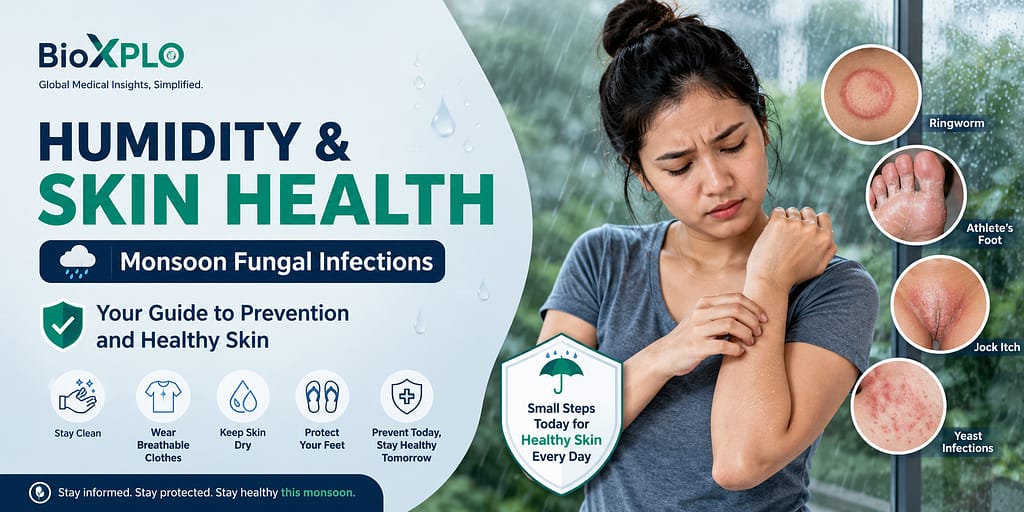
The monsoon season transforms our surroundings, washing away the summer dust and bringing a much-needed drop in temperature. But alongside the cozy rainy days and lush landscapes comes a drastic spike in airborne moisture. Did you know that dermatology clinics often see a 40% to 50% increase in patients suffering from skin conditions during the rainy season? The primary culprit behind this surge is the intense relationship between humidity and skin health.
As the air becomes heavily saturated with moisture, our body’s natural cooling mechanism—sweating—becomes inefficient. This creates a perfect storm on the surface of our skin. In this comprehensive, evidence-based BioXPLO guide, we will explore exactly why monsoon fungal infections are so common, how to identify their early symptoms, and the medically backed steps you can take to prevent them.
Whether you are a healthcare professional looking for a patient-education resource, or a general reader aiming to protect your family, this guide will provide clear, actionable, and scientifically accurate insights.
What Happens to Your Skin During Humid Weather?
To understand how to prevent fungal infections, we must first look at the science of what happens to the human skin barrier during high humidity.
The Role of Sweat and Moisture Trapping
The human body regulates its temperature by producing sweat, which cools the skin as it evaporates. However, during the monsoon, the air is already saturated with water vapor. Because the air cannot absorb much more moisture, your sweat simply sits on the skin rather than evaporating. This leads to prolonged dampness, especially in areas where skin touches skin (skin folds).
Skin Barrier Alterations (Maceration)
Your skin acts as a protective brick wall, keeping harmful microbes out. When skin remains wet for too long, it absorbs water and swells, becoming soft, wrinkled, and weak—a process known as maceration. A macerated skin barrier is easily compromised by friction from clothing, creating microscopic tears that allow pathogens to enter.
Microbial Overgrowth
Our skin is naturally colonized by a balanced microbiome of bacteria and fungi. However, fungi (specifically dermatophytes and yeasts) thrive in environments that are warm, dark, and damp. When sweat and heat are trapped against a softened skin barrier, these fungi multiply at an accelerated rate, overpowering the skin’s natural defenses and resulting in an active fungal skin infection.
Why Are Fungal Infections Common During Monsoon?
While fungal infections can occur year-round, the monsoon season elevates the risk exponentially due to several compounding environmental and behavioral factors:
- High Heat and Humidity: The combination of tropical temperatures and high atmospheric moisture creates an incubator-like environment for dermatophytes.
- Sweat Retention: Without rapid evaporation, sweat accumulates in skin folds like the groin, underarms, and between toes, providing the moisture fungi need to survive.
- Wet Clothing and Footwear: Getting caught in the rain is common. Staying in wet clothing, damp socks, or soaked shoes for hours allows fungi to easily penetrate the skin.
- Reduced Sunlight: Sunlight is a natural disinfectant. During the monsoon, clothes often take days to dry indoors, allowing fungal spores to survive and multiply within the fabric before the clothes are even worn.
Common Monsoon Fungal Infections
Fungal infections caused by dermatophytes are medically referred to as Tinea. Depending on the body area affected, they go by different names.
Table 1: Common Fungal Infections vs. Symptoms
| Infection Type | Medical Name | Body Area Affected | Primary Symptoms |
| Ringworm | Tinea corporis | Arms, legs, chest, back | Circular, red, scaly patches with raised borders and clear centers. Highly itchy. |
| Athlete’s Foot | Tinea pedis | Feet, spaces between toes | Intense itching, skin peeling, burning sensation, cracks, and sometimes foul odor. |
| Jock Itch | Tinea cruris | Groin, inner thighs, buttocks | Red, chafed-looking rash shaped like a half-moon. Severe itching and burning. |
| Yeast Infection | Candidiasis | Under breasts, armpits, groin | Bright red, inflamed patches, often with satellite pustules. Can be painful and itchy. |
| Nail Fungus | Onychomycosis | Fingernails, toenails | Thickened, brittle, crumbly, or discolored nails (yellow/brown). |
Focus on Prevention for Specific Infections:
- Ringworm Prevention: Avoid sharing personal items like towels, clothes, and combs. Wash hands thoroughly after touching animals, as pets can easily transmit ringworm.
- Athlete’s Foot Prevention: Never walk barefoot in public showers, locker rooms, or pool areas. Keep feet completely dry and change damp socks immediately.
- Jock Itch Prevention: Wear loose-fitting cotton underwear. Shower immediately after heavy sweating or gym workouts.
Common Symptoms to Watch For
Recognizing the early signs of a skin fungal infection is crucial for swift treatment. If you notice any of the following, a fungal overgrowth may be occurring:
- Red, inflamed rash with distinct borders.
- Circular lesions that expand outward.
- Intense itching that worsens when sweating or at night.
- Burning or stinging sensations in skin folds.
- Scaling, flaking, or skin peeling.
- Painful cracks or fissures, especially between toes.
- Foul odor emanating from the feet or groin.
- Skin discoloration (patches that are darker or lighter than your normal skin tone).
Who Is at Higher Risk?
While anyone can develop a fungal infection during humid weather, certain groups are highly susceptible and must take extra precautions:
Table 2: Risk Factors for Fungal Infections
| Risk Group | Why They Are Vulnerable |
| Diabetics | High blood sugar levels impair the immune system and provide excess glucose in sweat, which fungi feed on. |
| Obese Individuals | Deeper and more numerous skin folds trap heat and moisture, increasing friction and fungal growth. |
| Athletes & Gym Users | Excessive sweating, tight workout gear, and exposure to shared gym equipment increase exposure. |
| Outdoor Workers | Constant exposure to humidity, rain, and prolonged wearing of safety boots or heavy uniforms. |
| Immunocompromised | Individuals on immunosuppressants or with conditions like HIV have lower defenses against fungal overgrowth. |
| Children & Elderly | Children frequently play in puddles and dirt; the elderly may have thinner skin and reduced mobility for hygiene. |
Wearing tight synthetic clothing or having a condition that causes excessive sweating (hyperhidrosis) also drastically increases personal risk.
Daily Prevention Guidelines: Your Monsoon Skincare Routine
Preventing fungal infections naturally is heavily reliant on modifying your daily routine to combat humidity.
Personal Hygiene
- Daily Bathing: Shower daily, and consider a second shower if you get drenched in the rain or sweat heavily.
- Dry Skin Thoroughly: This is the most critical step. Use a clean, dry cotton towel to gently pat yourself dry. Ensure areas between the toes, the groin, and under the breasts are bone-dry before dressing.
- Change Clothes Regularly: Never sit in sweaty or rain-soaked clothes.
Clothing Choices
- Embrace Loose Cotton: Cotton is breathable and absorbs sweat, allowing it to evaporate. Avoid synthetic materials like nylon, polyester, and spandex.
- Avoid Damp Clothes: Never wear clothes that feel slightly damp.
Foot Care
- Keep Feet Dry: If you commute through rain, wash your feet with soap immediately upon reaching your destination.
- Breathable Footwear: Opt for open-toed sandals, flip-flops, or canvas shoes that allow air circulation. Avoid tight leather or plastic shoes.
- Socks: Wear 100% cotton socks and change them twice a day if your feet sweat heavily.
Home Care & Laundry
- Sun-Dry Clothes: Whenever possible, dry clothes in direct sunlight. Sunlight acts as a natural fungicide.
- Iron Your Clothes: If sun-drying isn’t possible, iron your garments inside out, especially undergarments and towels, to kill residual fungal spores.
- Dry Bathrooms: Keep your bathroom ventilated to prevent mold and fungi from settling on your hanging towels.
Gym & Public Spaces
- Do Not Share: Never share towels, water bottles, or workout mats.
- Wear Slippers: Always wear flip-flops in gym locker rooms and public showers.
- Clean Equipment: Wipe down gym benches and mats with antibacterial/antifungal wipes before use.
Skin Care Routine
Table 3: Daily Skincare Routine for Humid Weather
| Step | Action | Focus Area |
| Cleanse | Use a gentle, pH-balanced cleanser to wash away sweat and grime without stripping the skin barrier. | Full body, especially skin folds. |
| Dry | Pat dry with a fresh cotton towel. Do not rub vigorously. | Toes, groin, underarms, neck. |
| Protect | Apply a medical-grade dusting powder (if recommended by a doctor) to absorb excess sweat. | Areas prone to heavy sweating. |
| Moisturize | Use a lightweight, non-comedogenic lotion on dry patches. Avoid thick creams that trap moisture. | Arms, legs, face (avoid skin folds). |
Foods That Support Healthy Skin
Your diet plays a supportive role in maintaining skin barrier integrity and a strong immune system. During the monsoon, focus on:
- Vitamin C & E: Found in citrus fruits, fresh vegetables, nuts, and seeds. These vitamins act as antioxidants, helping repair skin damage.
- Vitamin A: Essential for skin cell turnover (found in carrots, sweet potatoes, and spinach).
- Protein & Zinc: Crucial for tissue repair and immune function.
- Probiotics: Curd (yogurt) and fermented foods help maintain a healthy gut microbiome, which is linked to a healthy skin microbiome.
- Hydration: Drink plenty of purified water.
- Limit Sugar: Excessive sugar intake can spike blood glucose levels, creating an environment where fungi thrive. Reduce refined sugars if medically appropriate.
Common Mistakes People Make
When dealing with a skin fungal infection, minor mistakes can lead to severe complications:
- Ignoring Early Symptoms: Dismissing a small itchy red patch allows the infection to spread rapidly.
- Using Steroid Creams: Over-the-counter creams often contain strong steroids (like clobetasol or betamethasone). While they stop the itch temporarily, they suppress local immunity, causing the fungus to spread wildly (a condition called Tinea incognito).
- Sharing Towels: This guarantees the spread of the infection to family members.
- Scratching the Infection: Scratching breaks the skin, inviting secondary bacterial infections that cause pus and pain.
- Stopping Treatment Too Early: Fungal infections look like they have healed before the fungus is completely dead. Stopping prescribed medication early leads to stubborn recurring infections.
When Should You Visit a Doctor?
While preventive skin hygiene during the monsoon can keep most issues at bay, you must seek professional care from a certified dermatologist if you notice:
- A rash that is persistent, expanding, or covers large areas of the body.
- Severe pain, swelling, warmth, or pus oozing from the lesions (signs of bacterial infection).
- A fever accompanying the skin rash.
- You are a diabetes patient experiencing foot peeling or cracks.
- The infection occurs in children or during pregnancy (specialized, safe medications are required).
- The infection keeps coming back despite proper hygiene.
Note: BioXPLO aligns with guidelines from the WHO, CDC, and the American Academy of Dermatology (AAD). This guide complements, but does not replace, professional medical consultation.
Myth vs Fact: Monsoon Skincare
Table 4: Common Skin Fungal Infection Myths
| Myth | Fact |
| “Only dirty people get fungal infections.” | False. Anyone can get them. High humidity, sweat retention, and tight clothes are the main triggers, regardless of daily showers. |
| “Talcum powder cures fungal infections.” | False. Powders can keep skin dry to prevent infections, but they do not contain medication to cure an active fungal infection. |
| “Once the itching stops, I can stop using the cream.” | False. Fungi survive under the skin’s surface. You must complete the full course prescribed by your doctor to prevent recurrence. |
| “Over-the-counter anti-itch creams are safe to use.” | False. Many contain steroids that make fungal infections significantly worse over time. |
| “Fungal infections are not contagious.” | False. Conditions like ringworm and athlete’s foot are highly contagious through skin contact or shared items. |
| “Hot water baths kill skin fungus.” | False. Very hot water damages the skin barrier, causing dryness and irritation, which can make the skin more vulnerable. |
Dermatologist Tips for Humid Weather Skin Care
Based on peer-reviewed dermatology literature, clinical experts recommend a proactive approach to humid weather:
- Embrace the Power of Drying: Never underestimate the effectiveness of simply keeping skin folds completely dry.
- Choose the Right Soap: Avoid harsh antibacterial soaps that strip the skin’s natural, protective oils. A gentle, pH-balanced cleanser is best.
- Wash New Clothes: Always wash new clothes before wearing them to remove sizing chemicals and potential contaminants picked up during transit or try-ons.
- Pet Care: If your pets are shedding excessively or have bald patches, take them to a vet. Pet-to-human transmission of ringworm is very common during monsoons.
Key Takeaways
- Humidity causes sweat retention, which weakens the skin barrier and creates a perfect breeding ground for fungal infections.
- Ringworm, Athlete’s Foot, and Jock Itch are the most common monsoon fungal infections.
- Thorough drying of the skin after bathing, especially in skin folds, is the most crucial preventive step.
- Wear loose, breathable cotton clothing and avoid staying in wet or damp clothes and shoes.
- Do not use over-the-counter steroid creams for itchy rashes, as they worsen fungal infections. Always consult a dermatologist.
- Maintain good foot hygiene by keeping feet dry and avoiding walking barefoot in public areas.
Frequently Asked Questions (FAQ)
1. Can humidity cause fungal infections?
Yes, high humidity creates a warm, moist environment on the skin. Because sweat cannot evaporate efficiently in humid air, it causes skin maceration (softening) and provides the perfect damp environment for fungi to multiply.
2. How can I prevent fungal infections during monsoon?
Prevent fungal infections naturally by bathing daily, drying your skin thoroughly with a clean towel, wearing loose cotton clothing, avoiding wet shoes or socks, and ironing your clothes to kill residual fungal spores.
3. Is ringworm contagious?
Yes, ringworm is highly contagious. It can easily spread through direct skin-to-skin contact with an infected person or animal, or by sharing contaminated items such as towels, combs, or clothing.
4. Can sweating cause fungal infections?
Sweat itself does not cause the infection, but trapped sweat creates the moist environment that fungi require to grow. Managing excessive sweating through proper hygiene and breathable fabrics is key to prevention.
5. Which soap is best for preventing fungal infections?
Dermatologists recommend gentle, pH-balanced syndet bars or cleansers. Harsh antibacterial soaps can strip the skin of its natural protective microbiome, making you more vulnerable to fungal overgrowth.
6. Can children get fungal infections?
Absolutely. Children are highly susceptible because they often play outdoors in wet conditions, share items at school, and may not dry themselves properly after bathing.
7. Should I use antifungal powder daily?
Medical-grade dusting powders can be used to absorb sweat in areas prone to chafing (like the groin or underarms) as a preventive measure, but they should be used based on a doctor’s recommendation. Regular cosmetic talcum powder is often ineffective and can clump.
8. When should I see a dermatologist?
See a dermatologist if a rash spreads rapidly, becomes painful, oozes pus, occurs alongside a fever, or does not improve after a few days of strict hygiene. Avoid self-medicating with steroid creams.
9. Can fungal infections recur?
Yes, recurring infections are very common, especially if a patient stops applying their prescribed antifungal medication as soon as the itching stops, rather than finishing the full course.
10. How long do fungal infections take to heal?
With proper medical treatment, symptoms like itching may subside in a few days. However, completely eradicating the fungus usually takes 2 to 6 weeks of continuous treatment, depending on the severity and location of the infection.
Conclusion
The monsoon season should be a time to enjoy the revitalized environment, not a time to battle uncomfortable skin conditions. By understanding the intricate relationship between humidity and skin health, you can take proactive steps to protect yourself.
Remember, prevention is always better than cure. Maintain excellent personal hygiene, keep your skin folds dry, choose breathable fabrics, and never ignore the early warning signs of a skin rash. If you suspect an infection, prioritize professional care over quick, over-the-counter fixes.
Empower your health journey with accurate information. Follow BioXPLO for more evidence-based medical insights, simplified for your everyday life. Stay healthy, stay dry, and enjoy the monsoon safely!