
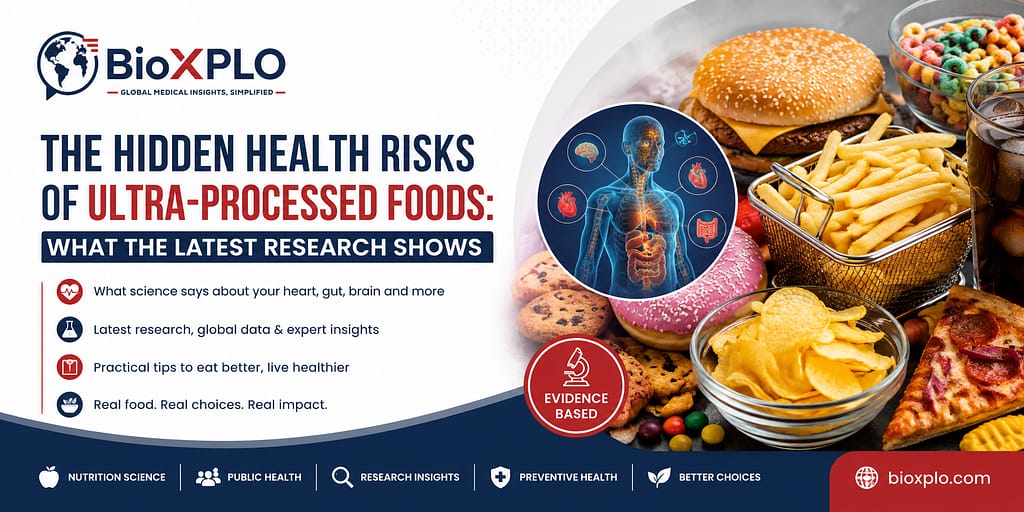
Have you ever opened a bag of your favorite chips, intending to eat just a handful, only to look down 15 minutes later and realize the entire bag is gone? You are not alone, and it is not a lack of willpower. It is a triumph of modern food engineering.
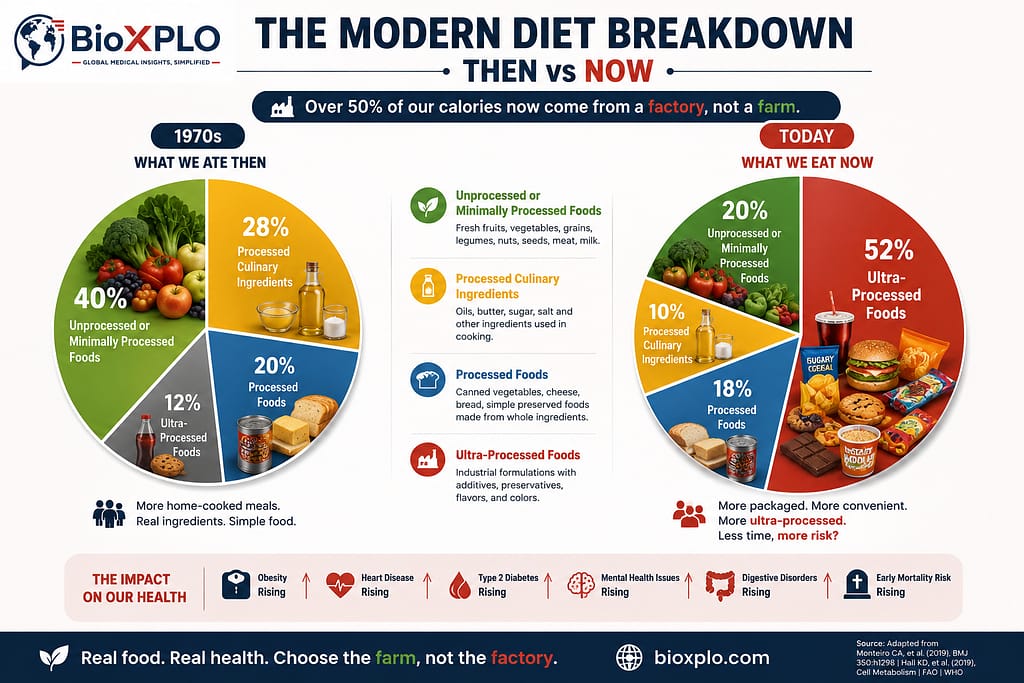
Today, over half of the daily calories consumed in many industrialized countries come from ultra-processed foods (UPFs). They are inexpensive, heavily marketed, and practically everywhere. But as our reliance on these convenient products has grown, so too has the global burden of chronic diseases.
Why are scientists becoming increasingly concerned about the shift away from traditional, whole-food diets? In this BioXPLO special report, we break down the latest ultra-processed food research, exploring exactly what these foods are doing to our bodies, why they are so hard to resist, and how you can take practical steps toward healthy eating and preventive nutrition—without feeling guilty.
What Are Ultra-Processed Foods?
To understand what makes a food “ultra-processed,” researchers and health professionals rely on the NOVA food classification system. Developed by public health researchers, NOVA categorizes food not by its nutrients (like fats or carbohydrates), but by the extent and purpose of its industrial processing.
The NOVA system divides everything we eat into four distinct groups:
- Unprocessed or Minimally Processed Foods: These are whole foods taken directly from nature. They might be cleaned, frozen, or dried to make them safe and edible, but nothing extra is added.
- Processed Culinary Ingredients: These are substances extracted from natural foods used to cook and season dishes, such as olive oil, butter, sugar, and salt.
- Processed Foods: These are relatively simple products made by adding Group 2 ingredients (like salt or oil) to Group 1 foods (like vegetables or nuts) to preserve them or make them tastier. Examples include freshly baked bread, canned beans, and cheese.
- Ultra-Processed Foods (UPFs): These are complex industrial formulations. They are typically made mostly or entirely from substances extracted from foods (like refined starches, isolated proteins, and hydrogenated oils). Crucially, they contain food additives—such as artificial flavors, colors, emulsifiers, and preservatives—to make them highly profitable, convenient, and impossible to resist.
The NOVA Food Classification Breakdown
| NOVA Group | Description | Common Examples |
| Group 1: Unprocessed / Minimally Processed | Foods in their natural or near-natural state. | Fresh fruits, vegetables, raw nuts, plain milk, eggs, fresh meat, plain oats. |
| Group 2: Culinary Ingredients | Extracted substances used to cook or season. | Olive oil, butter, salt, cane sugar, honey. |
| Group 3: Processed Foods | Whole foods combined with culinary ingredients. | Canned tuna, artisanal bread, canned vegetables, salted nuts, basic cheese. |
| Group 4: Ultra-Processed Foods | Industrial formulations with chemical additives. | Soda, packaged cookies, frozen pizzas, instant noodles, hot dogs, candy. |
Did You Know?
Not all processing is bad! Pasteurizing milk or freezing vegetables is a form of processing that actually keeps food safe and locks in nutrients. The scientific concern lies specifically with ultra-processing.
Common Examples of Ultra-Processed Foods
Identifying UPFs can be challenging because they often wear “health halos”—packaging that loudly claims a product is high in protein, low in fat, or made with real fruit, hiding the fact that it is highly engineered. Here is a breakdown of common UPFs by category:
- Breakfast: Sweetened breakfast cereals, mass-produced packaged bread, flavored instant oatmeal, toaster pastries, and commercial cereal bars.
- Snacks: Packaged potato chips, cheese puffs, fruit snacks made with artificial dyes, and many energy or protein bars.
- Beverages: Soft drinks, energy drinks, sweetened iced teas, and packaged fruit-flavored drinks (that are not 100% juice).
- Frozen Meals: Frozen pizzas, microwave dinners, and pre-packaged diet meals.
- Fast Food & Meats: Chicken nuggets, hot dogs, processed sausages, cold cuts, and commercial fast-food hamburgers.
- Pantry Staples: Instant noodles, powdered soups, and boxed macaroni and cheese.
- Desserts: Packaged cakes, cookies, candy, and ice cream loaded with stabilizers.
Quick Tip: The Kitchen Test
Look at the ingredient label. If you see a long list of items you cannot find in a typical home kitchen (like maltodextrin, high-fructose corn syrup, or polysorbate 80), the product is ultra-processed.
Why Scientists Are Concerned
Historically, nutrition science focused on single nutrients: telling the public to “eat less fat” or “cut down on sugar.” However, researchers now realize that UPFs are much more complex than simple “junk food.”
Scientists are deeply concerned because industrial processing alters the very structure of the food. These foods are characterized by:
- Industrial Processing: Techniques like extrusion and molding destroy the natural structure (or matrix) of the food, breaking down natural fibers that keep our digestion slow and healthy.
- Hyper-palatability: UPFs are engineered to hit the “bliss point”—the scientifically calculated ratio of sugar, salt, and fat that makes a food irresistible to the human brain.
- Food Additives: Artificial sweeteners, emulsifiers, and preservatives are added to extend shelf life and mimic the texture of real food.
- Refined Starches: These heavily milled carbohydrates cause rapid, unhealthy spikes in blood sugar.
- Poor Nutritional Profiles: They are notoriously low in fiber, vitamins, and minerals, while being packed with high sugar, high sodium, and high unhealthy fats.
What the Latest Research Shows
Recent years have seen an explosion of high-quality ultra-processed food research. When experts look at the data, the findings are remarkably consistent.
A recent landmark umbrella review (a massive study that combines data from multiple meta-analyses) published in The BMJ, alongside independent research in The Lancet and studies indexed in ScienceDirect, found direct associations between high UPF consumption and an increased risk of 32 different health parameters.
Based on massive cohort studies, systematic reviews, and meta-analyses, diets heavy in ultra-processed foods are strongly associated with:
- Metabolic Issues: Obesity, type 2 diabetes, and fatty liver disease.
- Heart Health: High blood pressure, stroke, and overall cardiovascular disease.
- Mental Health: Higher rates of depression, anxiety, and sleep issues.
- Neurological Decline: An increased risk of dementia and cognitive decline.
- Digestive Disorders: Poor gut health, irritable bowel syndrome (IBS), and Crohn’s disease.
- Cancer risk: Specifically colorectal cancer and overall cancer mortality.
- Overall Mortality: A significantly higher risk of premature death from all causes.
Understanding the Evidence: Association, Correlation, and Causation
It is important to understand study limitations honestly. Much of the long-term human research on UPFs relies on observational cohort studies. This means researchers observe a strong association (or correlation) between eating UPFs and poor health, but observational studies cannot definitively prove causation (that the UPF alone caused the disease, independent of things like exercise, income, or smoking).
However, scientists have proven causation in controlled environments. In a famous randomized controlled trial conducted by the U.S. National Institutes of Health (NIH), healthy volunteers were locked in a clinic for a month. For two weeks, they ate an ultra-processed diet; for the other two weeks, an unprocessed diet. Both diets had the exact same amounts of calories, sugar, fat, and fiber available. The result? When eating the ultra-processed diet, participants unknowingly consumed about 500 extra calories a day and gained weight rapidly.

How Ultra-Processed Foods Affect the Body
To understand the true health risks of processed foods, we must look under the hood at how these industrial products interact with our biology.
Brain
UPFs, especially those rich in refined sugars and fats, can alter brain chemistry. They trigger massive releases of dopamine—the brain’s primary “feel-good” reward chemical. Over time, the brain requires more of these hyper-stimulating foods to achieve the same pleasure response, leading to cravings, mood swings, and a higher risk of depression.
Heart
The link between processed foods and heart disease is one of the most well-documented areas of nutrition science. UPFs are typically loaded with hidden sodium and unhealthy trans or saturated fats. This combination stiffens blood vessels, raises blood pressure, and increases LDL (bad) cholesterol, forcing the heart to work overtime and increasing the risk of heart attacks.
Gut Microbiome
Your digestive tract is home to trillions of bacteria essential for digestion, immunity, and mood regulation. UPFs lack dietary fiber, which is the primary food for these helpful bacteria. Furthermore, UPFs may disturb the balance of healthy bacteria living inside your gut. When bad bacteria outnumber the good ones, it damages the gut lining and leads to digestive discomfort and disease.
Liver
Many UPFs contain high-fructose corn syrup. Unlike glucose, which is used by all cells for energy, fructose is metabolized almost exclusively by the liver. When consumed in large, liquid quantities (like in soft drinks), it overwhelms the liver, which converts the excess sugar directly into fat. This is a primary driver of non-alcoholic fatty liver disease (NAFLD).
Hormones
Because industrial processing breaks down the natural structure of food, UPFs digest incredibly fast. This causes a rapid, dangerous spike in blood glucose, followed by a massive release of insulin (the hormone that clears sugar from the blood). Over time, constant insulin spikes make your cells “deaf” to insulin’s signal, resulting in insulin resistance and eventually type 2 diabetes.
Immune System
A diet high in artificial additives and low in essential vitamins leaves the immune system under-resourced. The chronic inflammation triggered by chemical additives and poor gut health forces the immune system into a constant state of high alert, which wears it down and makes the body more susceptible to infections and autoimmune issues.
Metabolism
Your body actually burns calories just trying to digest food (the thermic effect of food). Because UPFs are pre-digested by factory machines (mashed, refined, and extruded), your body burns significantly fewer calories digesting them compared to breaking down whole, fibrous foods.
Weight Regulation
Because they are calorie-dense, easy to chew, and incredibly soft, UPFs allow you to consume a massive amount of energy before your stomach has time to send “I’m full” signals to your brain, directly overriding the body’s natural weight regulation systems.
Why UPFs Make Us Overeat
Why is it so easy to overeat cookies, but nearly impossible to overeat broccoli?
- Hyper-palatability: Food scientists formulate UPFs with precise combinations of salt, sugar, and fat that do not exist in nature, short-circuiting our natural fullness cues.
- Fast Eating & Reduced Satiety: UPFs are heavily refined and physically soft. You chew them less and eat them faster. It takes about 20 minutes for your gut hormones to tell your brain you are full. Eating quickly bypasses this window.
- Dopamine Reward Pathways: The massive dopamine hit from UPFs creates a feedback loop, encouraging you to keep eating purely for pleasure, not hunger.
- Food Texture: The “melt-in-your-mouth” quality of snacks like cheese puffs tricks the brain into thinking the calories have vanished, encouraging you to eat more.
- Liquid Calories: Sugary beverages provide zero feeling of physical fullness but can pack hundreds of empty calories.
- Portion Size: UPFs are frequently sold in super-sized packaging, subconsciously encouraging massive overconsumption.
Food Additives: Should We Be Worried?
The ingredient list on a UPF can look like a chemistry experiment. While regulatory bodies like the FDA classify many of these chemicals as “Generally Recognized As Safe” (GRAS), modern research is raising new questions.
- Emulsifiers: Used to keep oil and water mixed (found in ice cream, mayonnaise, and oat milk). Recent studies suggest emulsifiers like polysorbate 80 and carboxymethylcellulose may erode the protective mucus lining of the gut, promoting inflammation.
- Artificial Sweeteners: Marketed as a zero-calorie health hack, evidence on sweeteners (like aspartame and sucralose) is mixed. Some studies suggest they can negatively alter gut bacteria and disrupt how the body processes real sugar, though this remains an active area of scientific debate.
- Artificial Colors: While some studies associate certain food dyes with hyperactivity in sensitive children, widespread danger to adults is not definitively proven.
- Preservatives: Ingredients like nitrites and nitrates, used to preserve processed meats (like bacon and hot dogs), have been strongly linked by the World Health Organization (WHO) to an increased risk of processed foods and cancer, specifically bowel cancer.
- Flavor Enhancers: Compounds like MSG are generally safe for most people, but they make food taste artificially savory, heavily contributing to overeating.
Ultra-Processed Foods Around the World
The global food landscape has shifted dramatically, moving away from local, traditional diets toward standardized, factory-made products.
- United States & United Kingdom: These nations lead the world in UPF consumption. In both countries, staggering estimates suggest that nearly 57% to 60% of an adult’s average daily calories come from ultra-processed sources.
- Canada & Australia: Following closely behind, UPFs make up roughly 45% to 50% of total dietary intake in these regions.
- Global Shifts: As multinational food corporations expand, countries in the Global South with traditionally whole-food-based diets are seeing a massive surge in UPF consumption, leading to a dangerous dual burden of undernutrition (lack of vitamins) and obesity.
The Indian Perspective
In India, dietary patterns are rapidly westernizing. Traditional, nutrient-dense home-cooked meals (dal, roti, sabzi) are increasingly being pushed aside by heavily marketed, convenient UPFs.
Common Indian UPFs include:
- Instant noodles: Often misleadingly marketed as a healthy evening snack for children.
- Packaged Namkeen & Chips: Traditional snacks that are now mass-produced with poor-quality oils, excessive sodium, and artificial flavors.
- Sugary Beverages: Packaged fruit drinks and sodas.
- Bakery Products: Mass-produced biscuits, rusks, and white bread made with refined flour and trans fats.
- Sweetened Dairy: Flavored milk and heavily sweetened, artificially flavored yogurt.
- Frozen Snacks: Ready-to-fry samosas, potato bites, and frozen parathas.
Suggesting Healthier Indian Alternatives:
Instead of packaged biscuits with your evening tea, opt for roasted makhana (fox nuts) or dry-roasted chana (chickpeas). Swap sugary, packaged fruit drinks for fresh coconut water, homemade buttermilk (chaas), or fresh lemon water without added refined sugar. Replace instant noodles with a warm bowl of whole wheat vermicelli (upma) loaded with fresh, seasonal vegetables.
Are All Processed Foods Bad?
A common point of confusion in nutrition science is the assumption that all processing is harmful. This is a dangerous myth. Many processed foods are not only safe but are highly nutritious, affordable, and essential for a balanced diet.
It is crucial to understand the difference between helpful processing (NOVA Groups 1 and 3) and ultra-processing (NOVA Group 4).
Examples of highly nutritious processed foods include:
- Frozen vegetables and fruits: Often flash-frozen at peak ripeness, preserving their nutrients perfectly.
- Milk and plain yogurt: Pasteurized for safety and fermented for gut health.
- Whole-grain bread: Traditional bread made with simple ingredients (flour, water, salt, yeast).
- Cheese: A simple fermented dairy product.
- Natural peanut butter: Where the only ingredients are peanuts and a pinch of salt.
- Canned beans: An excellent, cheap source of fiber and protein (just rinse them to reduce sodium).
- Plain oats: Processed to be edible, but maintaining all their natural fiber.
Quick Tip: Processing that adds life to your food (like fermenting yogurt) or preserves nutrients (like freezing peas) is great. Processing that strips nutrients and adds chemicals is the problem.
Practical Tips to Reduce UPFs
You do not need to overhaul your diet overnight. Perfect is the enemy of good when it comes to long-term diet and longevity. Here are actionable, realistic strategies to reduce your UPF intake:
- Read Ingredient Labels: Look past the marketing on the front of the box. If the ingredient list reads like a chemistry textbook, put it back on the shelf.
- Cook More Meals at Home: Cooking gives you total control over what goes into your food. Start small by committing to one extra home-cooked dinner per week.
- Prioritize Whole Foods: Build your meals around vegetables, fruits, whole grains, beans, nuts, and lean, unprocessed proteins.
- Choose Water Over Sugary Drinks: Liquid calories are a major source of UPFs. Swap sodas and energy drinks for plain water, sparkling water, or unsweetened herbal tea.
- Snack on Fruits and Nuts: Replace packaged chips and candy bars with whole fruits, unsalted nuts, hard-boiled eggs, or plain yogurt with a drizzle of honey.
- Plan Weekly Meals: You are more likely to reach for a frozen pizza when you are exhausted and have no plan. Basic meal prepping helps you bypass the convenience trap.
- Avoid Shopping When Hungry: You are much more vulnerable to the bright packaging and hyper-palatable appeal of UPFs on an empty stomach.
- Make Gradual Swaps: Don’t throw out everything in your pantry today. When you run out of flavored instant oatmeal, replace it with rolled oats and fresh fruit. Gradual changes last longer.
Myth vs Fact
| Myth | Fact |
| All processed foods are unhealthy. | Many processed foods, like frozen vegetables, canned beans, and pasteurized milk, are nutritious and highly beneficial. |
| Organic ultra-processed food is always healthy. | Organic sugar is still sugar. Organic snacks can still be heavily ultra-processed and stripped of their natural fiber. |
| You must cut out 100% of UPFs to be healthy. | Health is about overall dietary patterns. Occasional consumption is perfectly fine within a predominantly whole-food diet. |
| If a package says “Low Fat,” it’s good for you. | Low-fat UPFs often contain immense amounts of added sugar and chemical thickeners to make up for the lost flavor of the fat. |
| Plant-based meat alternatives are whole foods. | Many commercial vegan burgers are heavily ultra-processed, containing protein isolates, binders, and excessive sodium. |
| Packaged fruit juice is a healthy alternative to soda. | Packaged juices lack fiber and cause rapid blood sugar spikes, functioning very similarly to soda in the body. |
| “Gluten-Free” means a product is healthy. | Gluten-free packaged snacks are often highly ultra-processed, using refined flours and gums to mimic the texture of gluten. |
| UPFs are only a problem for overweight adults. | UPFs can cause chronic inflammation, poor gut health, and metabolic dysfunction in people of all body sizes and ages. |
| Calories are all that matter for weight loss. | The source of calories matters deeply. 500 calories of broccoli affects your hormones and metabolism entirely differently than 500 calories of soda. |
| Eating healthy is always more expensive. | While some fresh produce is pricey, whole-food staples like dry beans, lentils, rice, frozen vegetables, and oats are incredibly cost-effective. |
Frequently Asked Questions (FAQ)
1. Are ultra-processed foods addictive?
While “food addiction” is a debated clinical diagnosis, UPFs are intentionally engineered to be hyper-palatable. They trigger strong dopamine responses in the brain, leading to craving cycles that heavily mimic addictive behaviors.
2. Can I eat them occasionally?
Absolutely. The goal of preventive nutrition is balance. Enjoying a slice of store-bought cake at a wedding or having a frozen meal on a hectic night will not ruin your health. It is the habitual, everyday consumption that causes harm.
3. How much is too much?
There is no universally agreed-upon safe threshold, but many nutrition experts and researchers suggest aiming to keep UPF intake under 10% to 20% of your total daily calories.
4. Are protein bars ultra-processed?
Yes, most commercial protein bars are classic UPFs. They are typically made from protein isolates (like whey or soy powder), artificial sweeteners, and emulsifiers, rather than whole food ingredients.
5. Is packaged bread unhealthy?
It depends on the bread. Mass-produced soft white bread with a shelf life of a month contains chemical preservatives and emulsifiers (making it a UPF). Bakery sourdough or bread made simply with flour, water, yeast, and salt is a nutritious processed food.
6. Are plant-based meat alternatives ultra-processed?
Yes, most commercial “fake meats” are heavily industrially processed to look, bleed, and taste like real meat. While they may be better for the environment, they are not necessarily healthier than a home-cooked meal of lentils or beans.
7. What should children eat instead?
Children are heavily targeted by UPF marketing. Instead of fruit snacks and sugary cereals, offer whole fruits, cheese slices, homemade smoothies, plain yogurt mixed with berries, and whole-grain toast with natural peanut butter.
8. Is homemade pizza healthier than frozen pizza?
Significantly healthier. Homemade pizza uses simple, recognizable ingredients (flour, fresh tomatoes, real cheese). Frozen pizzas contain modified starches, preservatives, and low-quality oils designed to survive freezing and microwaving.
9. Are artificial sweeteners dangerous?
They are classified as safe by major health authorities in standard amounts, but recent research suggests they may not aid long-term weight loss and could potentially alter the gut microbiome. Moderation is highly recommended.
10. What are the healthiest snack alternatives?
Unsalted nuts, pumpkin seeds, hummus with carrot and cucumber sticks, apple slices with almond butter, edamame, and air-popped popcorn (without artificial butter flavoring) are excellent whole-food choices.
11. How can I identify UPFs on food labels?
Look for the “industrial” ingredients. If you see high-fructose corn syrup, hydrogenated oils, soy lecithin, artificial colors (like Red 40 or Yellow 5), or words ending in “-ose” hidden throughout the label, it is likely a UPF.
12. Does reducing UPFs improve health?
Yes, and quickly. Studies show that replacing UPFs with whole foods can rapidly improve blood pressure, lower cholesterol, stabilize blood sugar, improve mood, and naturally reduce calorie intake without starvation.
Key Takeaways
- UPFs dominate modern diets: In many industrialized countries, ultra-processed foods make up over 50% of total daily caloric intake.
- The NOVA classification is key: It categorizes foods by their level of processing, helping consumers easily identify UPFs (Group 4) versus healthy processed foods (Group 3).
- They are engineered for overconsumption: Hyper-palatability, soft textures, and dopamine-triggering flavor profiles override the body’s natural fullness cues.
- Additives play a hidden role: Emulsifiers, artificial sweeteners, and preservatives may negatively impact the gut microbiome and drive widespread chronic inflammation.
- Strong disease associations: High UPF intake is consistently linked by major medical journals to obesity, heart disease, type 2 diabetes, depression, and certain cancers.
- Not all processing is bad: Freezing, canning, and pasteurizing are entirely safe processing methods that actually preserve nutrients and increase food access.
- Read the labels: If the ingredient list reads like a science experiment, it is best consumed in moderation.
- Small swaps win: You do not have to quit cold turkey. Gradually swapping UPFs for whole or minimally processed foods is the most realistic, sustainable path to long-term health.
Conclusion
The growing body of ultra-processed food research makes one thing crystal clear: the quality of our food matters just as much as the calories it contains. While navigating the modern food environment can feel overwhelming, understanding the hidden health risks of UPFs empowers you to make informed choices for your brain, your heart, and your gut health.
However, it is vital to avoid all-or-nothing thinking. Health is shaped by your overall, long-term dietary patterns rather than the occasional indulgence. You do not need to feel guilty for enjoying a slice of commercial pizza with friends or grabbing a packaged snack on a long road trip. By gradually replacing daily ultra-processed staples with whole or minimally processed foods, you can naturally reclaim your health, boost your energy, and support your longevity—one meal at a time.